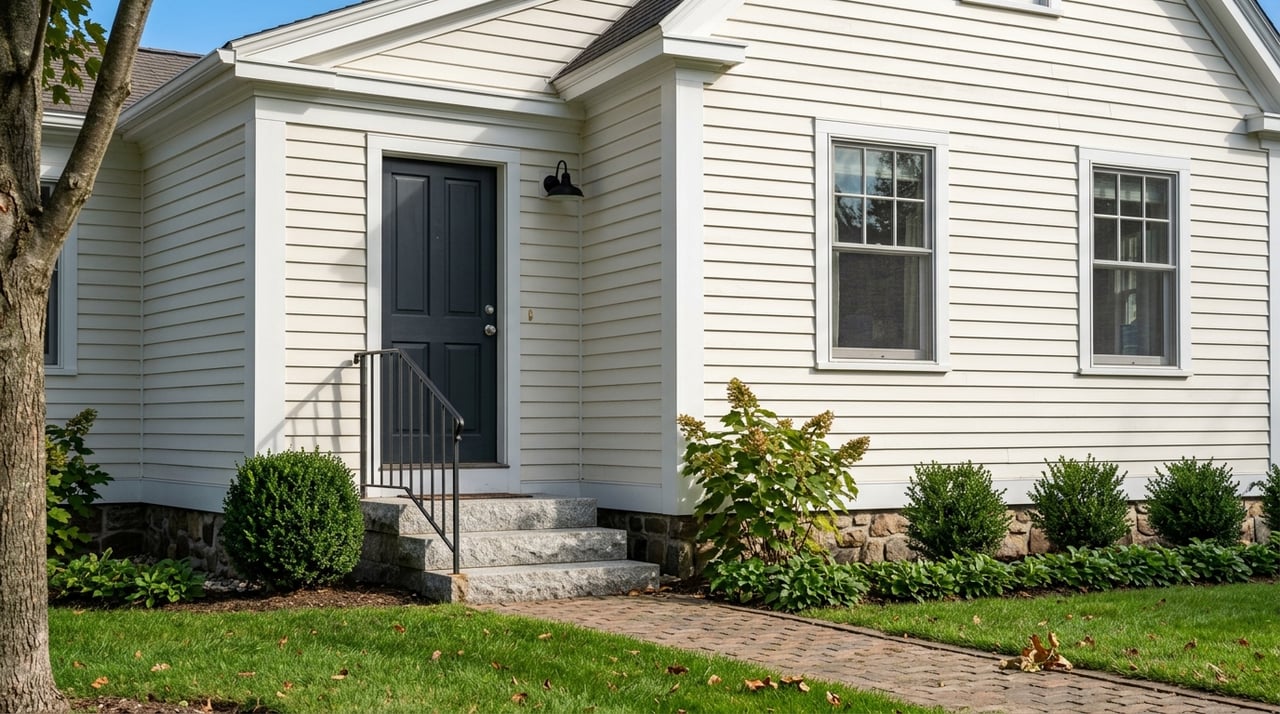
If you’re selling an older home in Coventry, you’re not alone. Nearly half of the town’s housing units were built before 1970, which means many sellers are navigating the same questions about repairs, disclosures, inspections, and pricing. The good news is that older homes can still attract strong buyer interest for their value and character, especially when you prepare thoughtfully and present the home with clarity. Let’s dive in.
Why older homes are common in Coventry
Coventry has a housing stock that leans older and heavily single-family. Local housing data reports that 47% of housing units were built before 1970, including about 24% built before 1950 and 22% built from 1950 to 1969. It also reports that 94% of occupied homes are single-family, so if you own an older detached home, your property fits a large share of the local market.
That matters because buyers in Coventry are often already expecting to see older homes. Your home’s age alone is not the issue. What matters more is how its condition, systems, and upkeep compare with other homes currently on the market.
What pricing looks like right now
Recent market snapshots place Coventry home values in roughly the high-$300,000s to about $400,000, depending on the source and timing. Reported figures include a typical home value around $399,507, a median list price near $397,950, and a median home price around $369,900, while Tolland County median sale pricing has been reported near $387,000.
For you as a seller, the takeaway is simple. Older homes can sell well, but pricing needs to reflect condition and buyer confidence. If your home has solid systems and good presentation, you may compete more effectively than a similar property with unanswered repair questions.
What buyers expect from an older home
Many buyers are open to older homes. National buyer data shows that 87% of purchases were previously owned homes, and buyers often choose them for better value, better price, and charm or character.
At the same time, buyers who avoid older homes often worry about renovations and plumbing or electrical problems. In practice, that means your home’s age is not usually the deal breaker. Uncertainty is.
Buyers want reassurance more than perfection
Most buyers do not expect an older Coventry home to feel brand new. They do expect transparency about major systems, visible maintenance, and a reasonable path forward if issues come up.
If you can show that the roof, electrical, heating, plumbing, drainage, foundation, and other core items have been maintained or evaluated, you may reduce friction during negotiations. That often matters more than purely cosmetic upgrades.
Inspections are a major part of the process
Home inspections often shape how an older home sale unfolds. Inspection guidance notes that common findings include structural or foundation issues, drainage problems, faulty wiring, HVAC issues, and safety items.
With an older home, a general inspection may be only the first step. Depending on what is found, buyers may also want input from specialists such as a structural engineer or chimney inspector.
Should you get a pre-listing inspection?
A pre-listing inspection can be a smart move if you want fewer surprises. It can help you learn about issues early, decide what to repair, and market the home with a clearer understanding of its condition.
This does not mean you need to fix everything. It means you get more control over timing, scope, and negotiation strategy before your home goes live.
Focus repairs where they matter most
If you are deciding where to spend money before listing, start with the issues most likely to affect safety, financing, appraisals, and buyer confidence. These are also the items most likely to come up during inspections.
Priorities often include:
- Roof leaks
- Gutter and drainage problems
- Active foundation or structural concerns
- Faulty wiring
- Plumbing leaks
- HVAC failures
- Septic or well concerns
- Unresolved radon or lead-related issues
Cosmetic updates come second
Fresh paint, decluttering, lighting, and simple appearance improvements can still help. They just tend to work best after the larger condition questions are answered.
In a market where many homes are older, buyers can accept dated finishes more easily than they can accept unknown repair risk. If your budget is limited, it often makes sense to solve the biggest confidence issues first.
Connecticut disclosures matter
In Connecticut, most transfers of residential property with one to four dwelling units require a Residential Property Condition Report before the buyer signs a binder, contract, option, or lease with a purchase option. The current state form was revised in July 2025.
If the seller does not provide the form, the buyer receives a $500 credit at closing. The form also makes clear that it is not a warranty and not a substitute for inspections.
“As-is” still does not remove disclosure duties
Some sellers assume an older home can simply be sold as-is with minimal paperwork. That is not how the process works.
Even in an as-is sale, the Connecticut property condition report still matters when required. Buyers may still conduct inspections, and your disclosure obligations do not disappear just because you are not planning to make repairs.
Foundation questions may come up in Coventry
In Coventry, foundation concerns are a realistic part of buyer due diligence. Town officials state that defective foundations are known to exist locally, and they advise property owners who suspect a crumbling foundation to consult a licensed engineer.
State housing officials have also said that some foundations poured between 1983 and 2016 have shown defective concrete. Because of that, buyers may ask whether you have had testing, engineering review, repairs, or remediation, even if a separate statutory foundation report is not required for your transaction.
Be ready with facts, not guesses
If your home has any foundation history, clear documentation helps. If you have an engineer’s report, repair records, or prior evaluations, having those ready can make conversations more straightforward.
If you do not know the condition, it may be worth addressing that uncertainty before listing. In many older-home sales, documented information creates more confidence than a vague answer ever will.
Lead paint rules may affect your sale
If your home was built before 1978, federal lead disclosure rules may apply. Buyers of most pre-1978 housing must receive the lead hazard pamphlet, any known lead information, available records or reports, a lead warning statement, and a 10-day opportunity to conduct a lead inspection or risk assessment before contract signing.
Because a large share of Coventry homes predates 1970, this is an important point to review early. It is especially relevant if your home has older painted surfaces, past renovation work, or records related to lead.
Well, septic, and radon can shape negotiations
Many older homes in the area raise practical questions beyond the house itself. If your property has a private well, Connecticut requires notice and educational materials before a sale, exchange, purchase, transfer, or rental of the property.
State health guidance also says private well testing is recommended at purchase, even though home-purchase water tests are usually lender-driven and not required by law. Buyers often want to discuss water quality, especially when a home relies on a private well.
Septic expectations
If your home uses a septic system, buyers may ask about age, maintenance, and inspection access. Connecticut does not require one universal septic inspection procedure, but state guidance notes that opening the tank and distribution boxes can be one of the most reliable ways to assess condition.
That means septic discussions can be detailed. If you have maintenance records or recent service information, it is helpful to gather them before you list.
Radon is worth planning for
Connecticut health officials say radon can occur in every part of the state, and the only way to know a home’s indoor level is to test. The EPA action level is 4 pCi/L.
Buyers may ask for radon testing, and some may also ask about radon in well water. If you already have test results or a mitigation system, that information can help answer questions early.
How to prepare your older home for market
Selling an older home in Coventry usually goes more smoothly when you prepare in a practical order. Start with the items that affect disclosure, condition, and buyer confidence before moving into marketing and showings.
A strong prep plan often looks like this:
- Review known issues and gather records
- Consider a pre-listing inspection if the home has age-related unknowns
- Prioritize repairs tied to safety, water intrusion, structure, or financing
- Organize documents for well, septic, foundation, radon, or lead if applicable
- Complete light cosmetic work after major concerns are addressed
- Price based on condition, not just hope
- Launch with strong photography, clear marketing, and a realistic negotiation plan
Why strategy matters with an older home
Older homes often need more than a standard list-and-wait approach. They benefit from thoughtful pricing, good documentation, responsive communication, and careful coordination around inspections and repair questions.
That is especially true if you are selling from out of town, managing a long to-do list, or trying to decide which projects are worth doing. With the right plan, an older home’s character can shine without letting preventable issues take over the conversation.
Selling an older home in Coventry does not mean you need a perfect house. It means you need a clear plan, honest disclosures, and smart preparation around the issues buyers are most likely to raise. If you want experienced local guidance on pricing, prep, contractor coordination, and marketing, Cheri Trudon can help you move forward with confidence.
FAQs
What should I expect when selling an older home in Coventry, CT?
- You should expect buyers to look closely at condition, disclosures, and inspections, especially for major systems like the roof, foundation, electrical, plumbing, heating, well, septic, and radon.
Do I need to fix everything before listing an older Coventry home?
- No. It is usually smarter to focus first on safety issues, water intrusion, structural concerns, and items that could affect financing or buyer confidence.
Is a pre-listing inspection helpful for an older home in Coventry?
- Yes, it can be. A pre-listing inspection may help you identify issues early, decide what to repair, and reduce surprises during the buyer’s inspection period.
What disclosures are required when selling a home in Connecticut?
- For most one- to four-unit residential sales, Connecticut requires a Residential Property Condition Report before the buyer signs certain agreements, and failing to provide it gives the buyer a $500 credit at closing.
Will buyers ask about foundation issues in Coventry, CT?
- Very possibly. Coventry officials say defective foundations are known to exist locally, so buyers may ask about engineering reports, prior testing, repairs, or remediation.
What if my Coventry property has a well or septic system?
- Buyers will usually expect discussion around water quality, septic condition, maintenance history, and possible testing or inspection access, so it helps to gather records before listing.
Do lead paint rules apply when selling an older Coventry home?
- If the home was built before 1978, lead disclosure rules may apply, including providing known information, available records, a lead warning statement, and a 10-day opportunity for the buyer to conduct a lead inspection or risk assessment before contract signing.
Should I test for radon before selling a home in Connecticut?
- Radon can occur anywhere in Connecticut, and testing is the only way to know a home’s level, so having recent results may help you answer buyer questions more confidently.